
Tooth-saving care
Relief for an injured or infected tooth
Root canal treatment in Houston removes infected or inflamed tissue from inside a tooth, helping relieve symptoms and preserve the natural tooth when possible.
Prefer to speak with our team? Call (713) 266-4222.
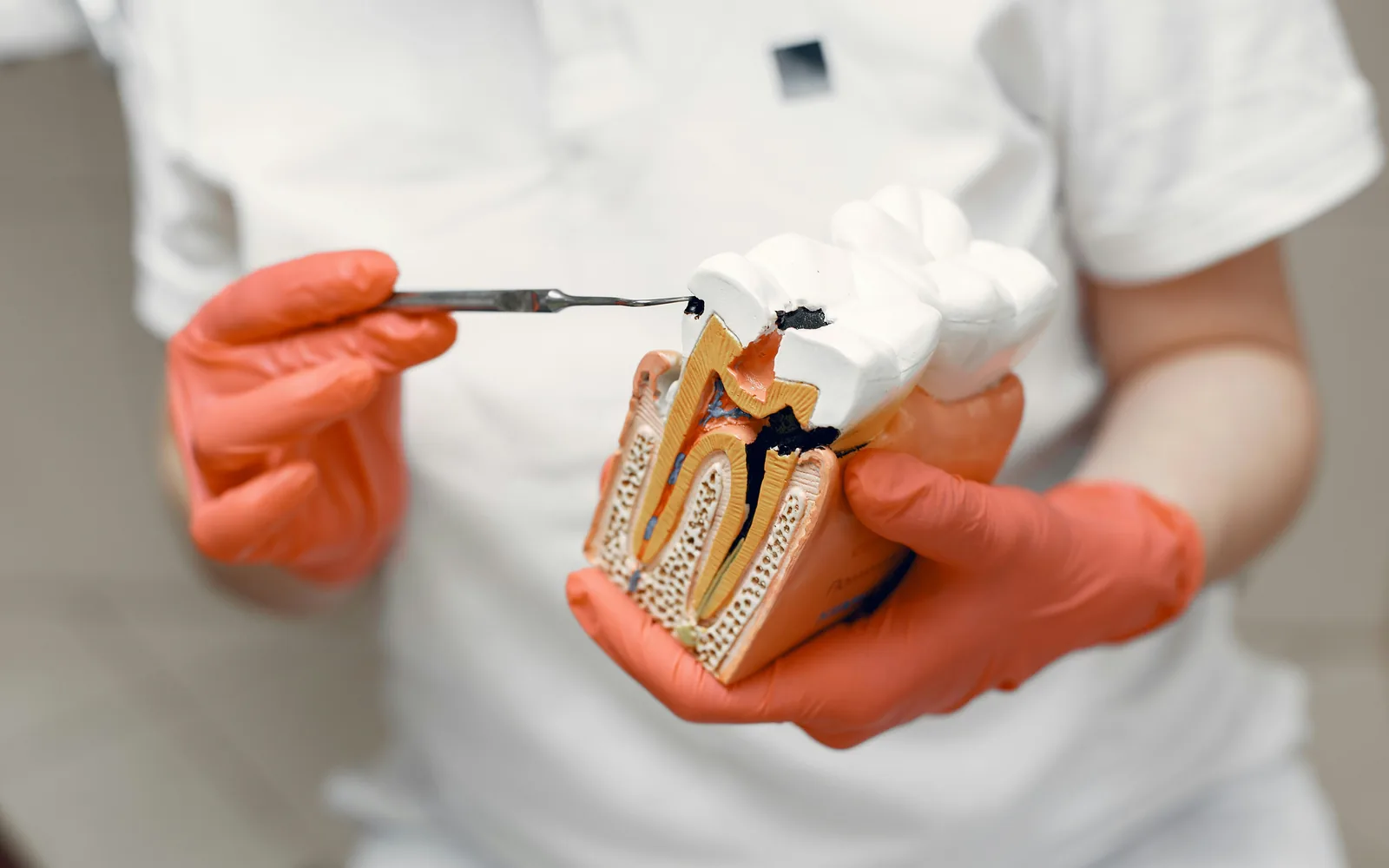
Saving teeth when possible
When decay, trauma, or cracks reach the inner pulp of a tooth, the result can be sensitivity, throbbing pain, swelling, or an abscess. Root canal treatment removes the affected tissue, cleans the canals, and seals the tooth.
After treatment, many teeth need a crown to restore strength and reduce the risk of fracture.
Planning Root Canal Treatment in Houston
An exam and dental imaging help identify whether pain or swelling is coming from the tooth pulp, a crack, the gums, the bite, or another source. We assess whether the tooth can be predictably restored before recommending root canal treatment.
After the canals are treated, the tooth still needs a durable seal and may need a crown, especially when a back tooth has lost significant structure. We explain the restorative step and timing so the tooth is not left vulnerable between appointments.
Signs you should call
- Lingering sensitivity to hot or cold.
- Severe toothache or pressure pain.
- Swelling, drainage, or a pimple-like bump near the gumline.
Ready to take the next step?
Contact our team to schedule an appointment and discuss the next step for your smile.
Or call (713) 266-4222 to speak with our team.